Today January 20, 2026, 03:00 PM
Today January 20, 2026, 03:00 PM
Q: Gilbert Martinez of Chino said he often sees drivers with a pet sitting on their lap while their vehicle is moving. This seems like a hazard. He asked if there are any laws to address this issue.
Martinez also asked about another potential road hazard: People driving with their disabled driver placard hanging from the rearview mirror, which can partially obstruct the driver’s view.
“Are there any programs out there that educate drivers on potential driving hazards such as these?” Martinez asked.
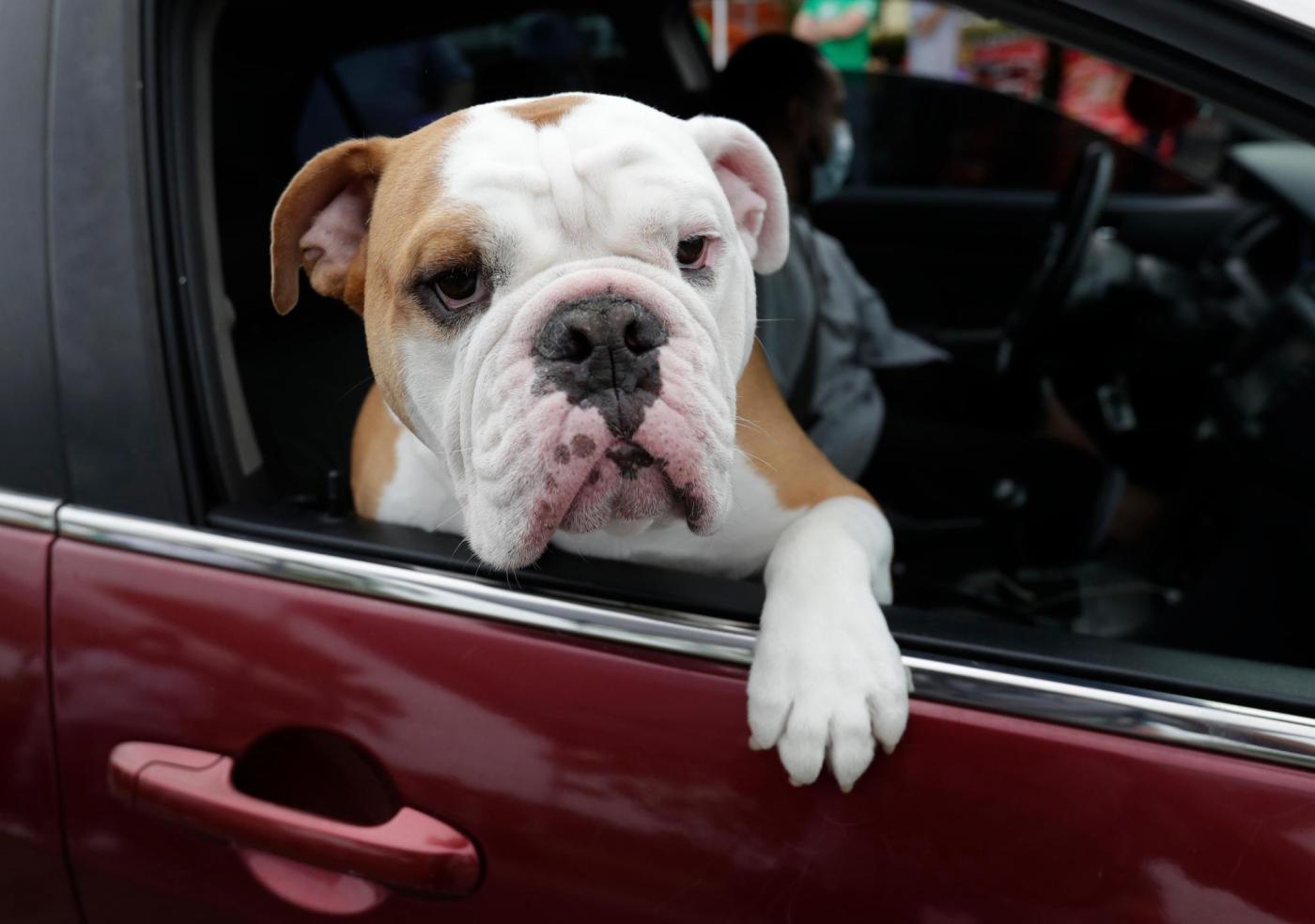
A: First of all, California law doesn’t specifically ban pets from being loose in the car, but drivers can still be cited if an unrestrained pet causes erratic driving or contributes to a crash. It’s legal to drive with a pet on your lap or unrestrained in the car simply because there’s nothing in the Vehicle Code that forbids it.
Driving with a pet on your lap or loose in a moving vehicle can be dangerous and the California Highway Patrol advises against it. The CHP recommends pets be secured in a pet car seat or a kennel.
“Operating a vehicle with a pet or any animal on the driver’s lap may place the driver in violation of California Vehicle Code 22350 (Basic Speed Law),” said CHP Officer Ivan Sandoval of the Inland Division. This law requires drivers to maintain a reasonable and safe speed for current conditions. “An animal on the lap restricts steering control, delays reaction time, obstructs visibility, and creates a significant distraction. These hazards make it unsafe to operate a vehicle at any speed, and a citation under VC 22350 may apply,” Sandoval said.
As for our reader’s concern about disabled placards hanging from the rearview mirror, Sandoval said drivers who do this may be violating California Vehicle Code 26708, which prohibits objects that obstruct or reduce the driver’s view.
“A disabled placard left hanging from the rearview mirror can interfere with visibility and create a safety hazard. Drivers are encouraged to remove the placard while the vehicle is in motion,” Sandoval said.
The CHP continues to educate the public about these issues through community presentations, social media messaging, and traffic safety outreach efforts, Sandoval said.
The public is invited to participate in two meetings this month to offer comments for the upcoming Euclid Avenue Bridge Project as it enters the environmental review phase. The existing bridge over Chino Creek faces capacity, safety and flooding challenges that can affect travel and regional connectivity, according to the city of Chino. The city is looking at changes to modernize the bridge and roadway, and improve safety and mobility.
Proposed improvements include elevating the existing bridge, widening Euclid Avenue from two to four lanes, and adding bicycle and pedestrian facilities on the corridor’s east side. The project would also repurpose the existing bridge as a dedicated wildlife crossing. Visit cityofchino.org/Euclid to see details and proposed improvements.
Through Feb. 11, the community may offer input on environmental topics considered in the Draft Environmental Impact Report. Two meetings to view a project presentation and offer public comments are planned.
• An in-person meeting is at 6 p.m. on Tuesday, Jan. 27, at The Parkhouse, 15871 Main St., Chino.
• A virtual meeting is at 6 p.m. on Thursday, Jan. 29. (Zoom Webinar ID: 827 5651 8473, call In: 213-338-8477). Live Spanish and Mandarin interpretation will be available at both meetings.
Comments can also be submitted through Feb. 11 by emailing Euclid@CityofChino.org, calling 909-264-8860, or mailing Michele Hindersinn, city of Chino Public Works Department, 13220 Central Ave., Chino, CA 91710.