Today January 31, 2026, 02:18 AM
Today January 31, 2026, 02:18 AM
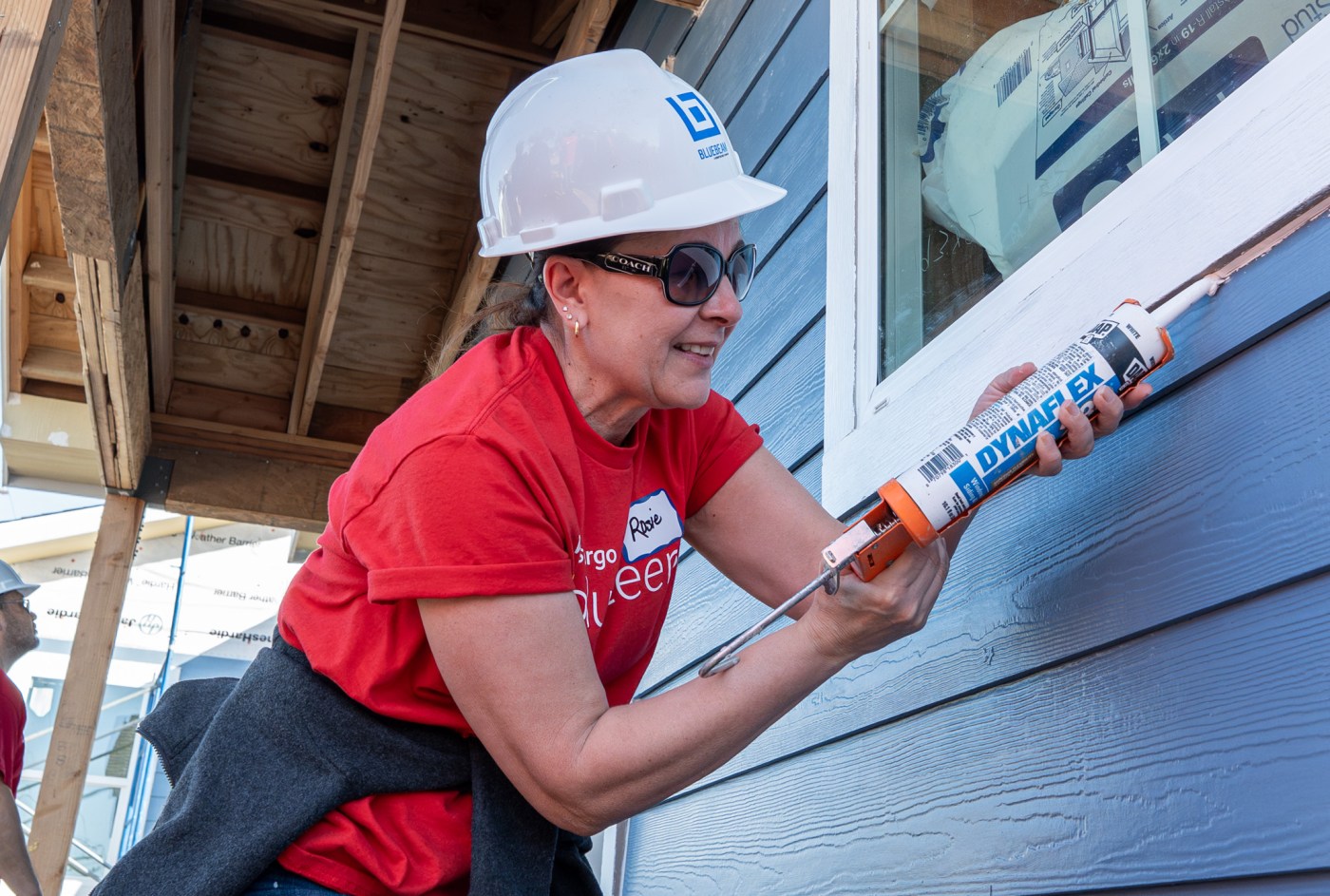
More than 30 employees from Wells Fargo rolled up their sleeves and got to work Friday morning with the San Gabriel Valley Habitat for Humanity in the rebuilding of an Altadena home destroyed by the Eaton fire.
The home, which belongs to Kenneth and Carol Wood, a couple in their 80s, is the first of 25 full homes that the nonprofit has committed to rebuilding.
They lived in their home on Pine Street for more than 30 years, and they had children who moved up just a few streets away.
Construction began back in October on the Woods’ home and is set to finish by the end of February. When it’s completed, it will have three bedrooms and two bathrooms.
“As it pertains to the elderly, there’s a reality that they need to get back in sooner,” said Bryan Wong, CEO of SGV Habitat for Humanity. “There’s this emotional aspect to all of this to get their lives back on track, to re-establish the norm.”
The Wells Fargo Foundation also presented a check of $1 million to the nonprofit to support the production of accessory dwelling units (ADUs) in Altadena for families impacted by the wildfires. Representatives from Congresswoman Judy Chu, state Sen. Sasha Renée Pérez and Assemblymember John Harabedian’s offices each presented Wells Fargo Foundation with a Certificate of Recognition.
“This is the power of public-private partnership,” said Gregg Sherkin, senior vice president of community relations at Wells Fargo.
A two-bedroom, one-bathroom ADU is being built concurrently with the main house where the couple’s garage used to be.
“The thing that’s unique about Altadena and the way that it’s structured is a lot of the houses, because they’re so old, had detached garages,” Wong said. “People are really used to seeing two structures on the same property. And if you build them at the same time, and they have the same basic design, look and feel, it doesn’t appear like the neighborhood is changing at all.”
Especially for elderly residents, whose children have moved out, they don’t need as much space as they used to, explained Wong.
Both the main house and the ADU are being built to be fire-resilient and fire-hardened, but have also taken into account design and green building elements.
The sidings of the homes are made from fiber cement, which is fire-resistant. The eaves have been fully sealed, so that embers cannot get trapped under.
Because ashes were coming in through the vents and into the attics, the new home will not have any vents on the outside of the house, and there is no attic — just high ceilings. And, throughout the house and in the ADU, there are several fire sprinklers on the ceilings of the main house and the ADU.
Hundreds of volunteers have since assisted with the rebuilding of the Woods’ home since it began in October. Some have even left messages of hope on the wood panels for the couple, with many saying the same thing: “welcome home.”