Today January 2, 2026, 10:45 PM
Today January 2, 2026, 10:45 PM
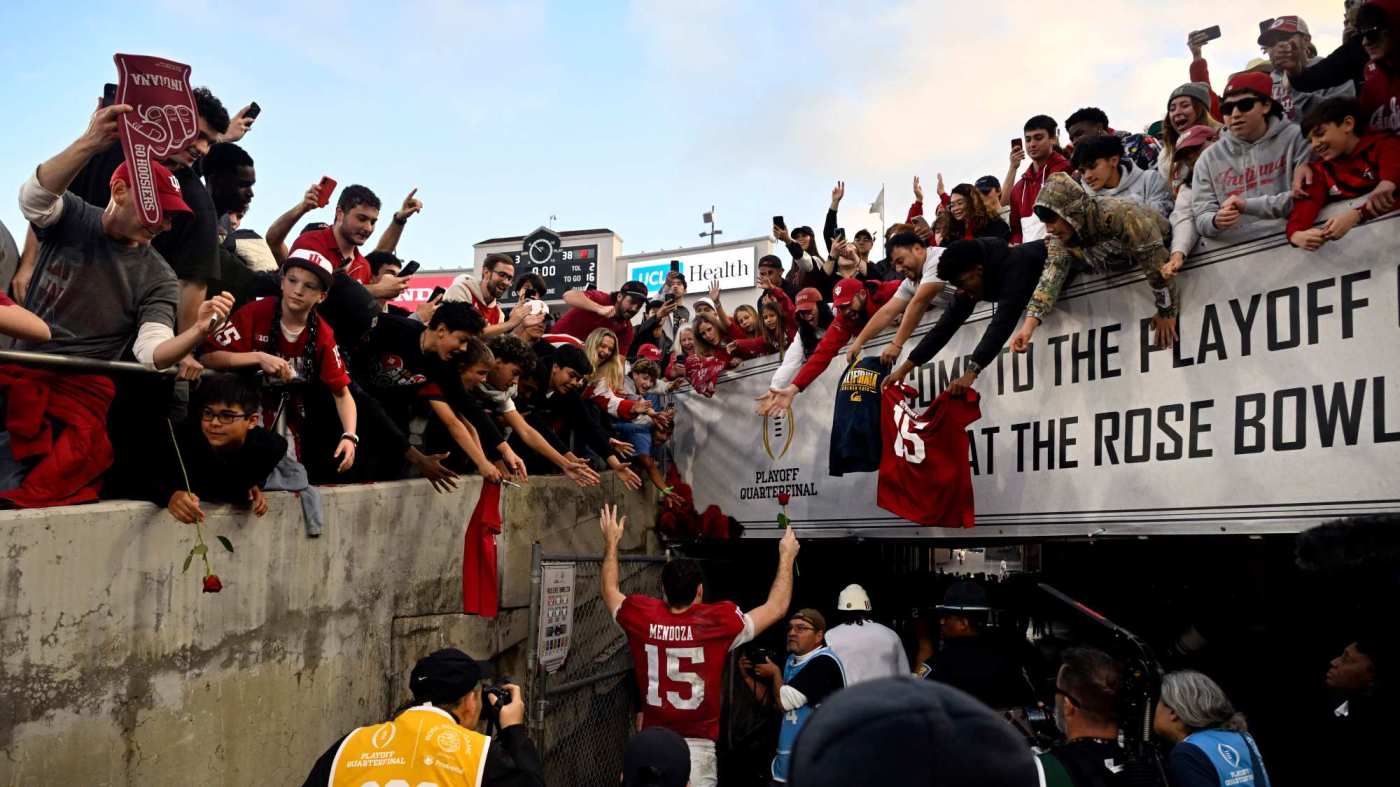
• The excitement of the major bowl games/College Football Playoff quarterfinals, and the way the current playoff format has added extra zest to the New Year’s Day football feast, can obscure the issues that threaten to make college sports – and not just football – unwatchable.
There’s always been kind of a suspension of belief involved in watching big time college football and basketball, in particular. In the amateur era – that expression sounds so quaint now – the imbalance between what the entire enterprise was worth and what the players got out of it was massive. Today players change teams more frequently than coaches, transfer portal action has become increasingly money-driven and the whole thing seems increasingly chaotic, if not outright unstable. …
• So, now that we’ve solved the issue of where college football’s championship game should be held – if you missed it, we’d make the Rose Bowl on Jan. 1 the regular championship game site and work back from there – here are some other suggestions. …
• We’d bring back the old transfer rule where a player has to sit out a year upon changing schools, and/or limit the number of times a player can transfer. Three or four schools in three or four years is too much. And how many of those multi-school athletes end up getting a degree?
Thought so. …
• We would also institute enforceable, unbreakable contracts. Georgia recently sued pass rusher Damon Wilson II, who signed a term sheet with the school’s booster collective, took a $30,000 payment and then entered the portal and transferred to Missouri. These players have agents, too, and maybe their representatives should remind them of the obligation of signing on the dotted line. …
• And we’d end the “student-athletes” charade and recognize the players for what they are: Employees in a multi-million dollar industry. College and NCAA administrators who have resisted the idea of classifying their players as employees should reverse course for two reasons: It reflects reality, and it provides them with a better chance to get the antitrust legislation they crave through Congress. …
• The catch there, and the main reason why the NCAA and individual institutions resist: Employee status would, in this case, need to include collective bargaining rights. But that legislation, coupled with a legitimate agreement with the athletes and their bargaining arm, would also enable the NCAA – or whatever governing body emerges from this changed landscape – to adequately enforce rules like transfer limitations, or four years of eligibility in five academic years, without having to repeatedly defend them in court. …
• And to those athletes who have filed suit for extra eligibility and essentially argued that their years spent at a JC shouldn’t count: That wasn’t the bargain when you enrolled at that two-year school with the aim of moving up to big-time college football or basketball, was it? …
• There are plenty of other issues that we don’t have the space here to resolve, but here’s a solution that anyone who has actually attended a college football game likely can relate to: Reduce the number of TV commercials per timeout. If you’ve sat through those three-minute stoppages in the stadium, waiting impatiently for the guy with the digital clock to get off the field, I’m sure you can relate. …
• Meanwhile, with Baylor’s basketball team adding a player who has already been an NBA draft pick, let’s face it: There is no real line of demarcation between amateur and pro any more. And since the colleges are developing talent for the NFL and NBA, shouldn’t those leagues be kicking in more of the expenses for that player development? …
• USC coach Lincoln Riley, in comments before the Alamo Bowl, again blamed Notre Dame for the demise of their rivalry, saying the Fighting Irish broke a promise to play “any time, anywhere.” Really, Lincoln, how disingenuous can you be? At no time was there a promise to play only on a date of USC’s choosing.
Anyway, Riley had better hope that third-and-20, i.e. the overtime play that allowed TCU to beat the Trojans in San Antonio, doesn’t turn out to be a lasting memory of his USC coaching tenure. …
• This week’s quiz, and if you go back far enough, this should be easy: What is Forum Blue? Answer below. …
• Negotiations between WNBA players and management drag on, with a Jan. 9 deadline coming up and the gap between sides creating the serious possibility of a work stoppage. And I find myself wondering how much of management’s stubbornness is actually coming from the NBA and its owners, who still seem to wield considerable, if quiet, power in the administration of the women’s league.
As significant as the disparities in pay and working conditions have been through the years, management still has a of ground to make up. Give these players their fair share for a change. …
• Meanwhile, hockey’s ECHL just reached an agreement with its players after a brief walkout, and players in soccer’s USL Championship tier have just had their collective bargaining agreement expire and are seeking “livable wages.” So if you had this vision of sports labor issues centering around players who already make millions, think again. …
• Quiz answer: “Forum Blue” was the description of the purple in the Lakers’ and Kings’ uniforms when Jack Kent Cooke owned the teams, by the owner’s mandate. As I wrote in a 1999 column on the last days of the Forum as a sports arena:
“Cooke loved the color purple, but he hated the word. So the Lakers and the Kings wore uniforms of “Forum Blue” and gold, and (Lakers announcer Chick) Hearn and Kings broadcaster Jiggs McDonald had to keep reminding TV viewers not to adjust the color on their sets.”
And when Jerry Buss purchased the franchises from Cooke, it was again proper to call the colors “purple” and gold. …
• Sartorial note, by the way: The Kings’ current black alternates, with the throwback crown that dates to the 1967 founding of the franchise, are sharp. But they would look a little sharper with some, um, “Forum Blue” and gold trim around that crown.
Or purple. …
• Then again, right now the uniforms look a lot sharper than the team does. That’s not good, at all, for the job security of already embattled coach Jim Hiller.