Today January 17, 2026, 03:09 PM
Today January 17, 2026, 03:09 PM
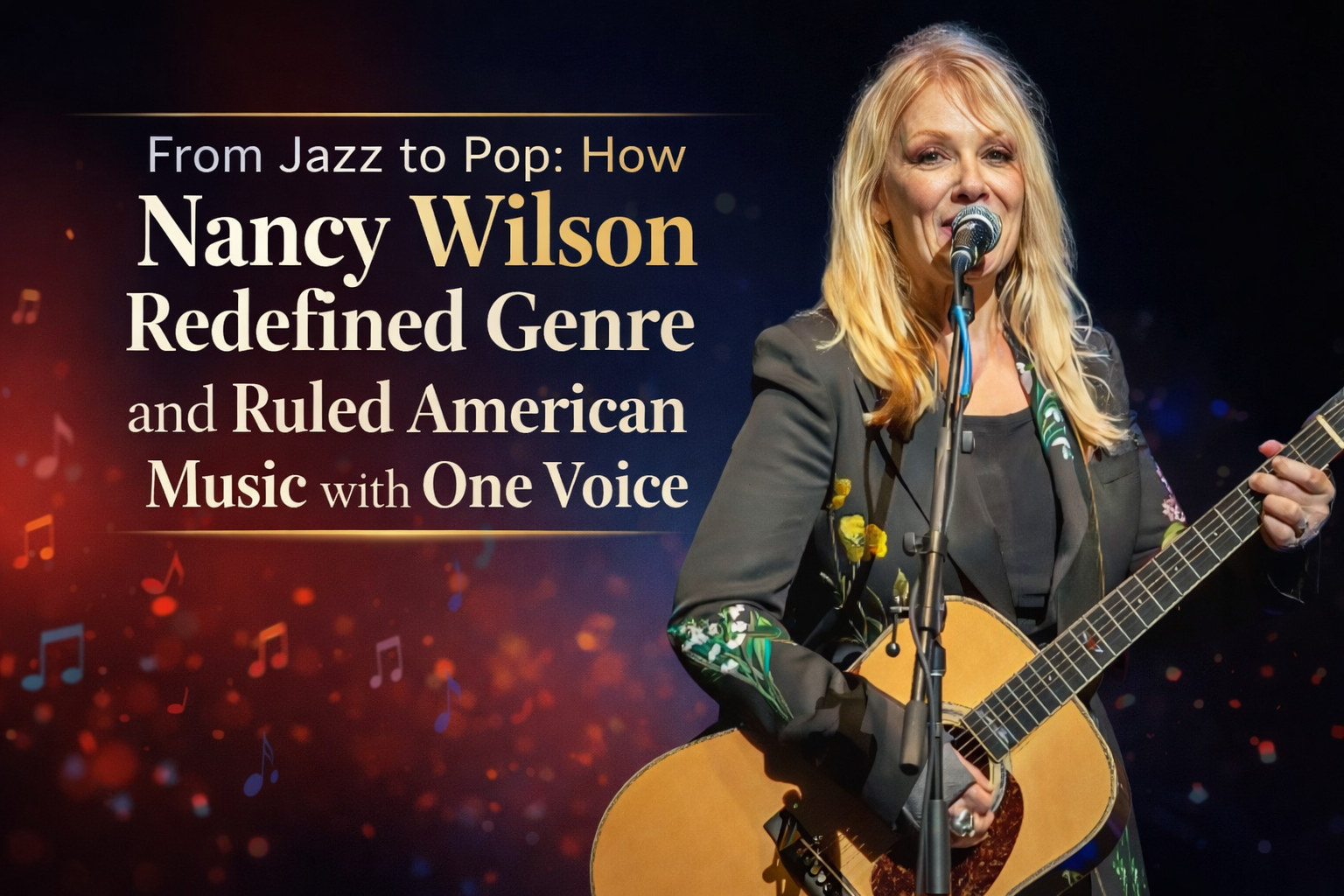
In the vast history of American music, some voices do more than sing—they define eras. Nancy Wilson was one such voice. With a career spanning over five decades, she effortlessly crossed the boundaries between jazz, pop, R&B, and soul, creating a legacy that still shapes modern vocal artistry.
At a time when artists were often boxed into strict categories, Wilson proved that genre was merely a framework, not a limitation. Her voice moved freely—elegant in jazz, intimate in ballads, and accessible in pop—without ever losing its identity.
Rooted in Jazz, Destined for More
Born on February 20, 1937, in Chillicothe, Ohio, Nancy Wilson grew up immersed in gospel and jazz traditions. By her early teens, she was already performing on local radio, showcasing a vocal maturity far beyond her years.
Her career took a decisive turn in 1959 when she signed with Capitol Records. Initially marketed as a jazz singer, Wilson’s artistry soon revealed something much larger: a rare ability to interpret any song with emotional precision and stylistic grace.
A Groundbreaking Crossover Artist
Nancy Wilson’s transition from jazz to mainstream pop was not accidental—it was revolutionary. Her 1964 album How Glad I Am earned her a Grammy Award and pushed her into the pop spotlight without alienating jazz audiences.
Songs like “(You Don’t Know) How Glad I Am”, “Guess Who I Saw Today”, and “Save Your Love for Me” demonstrated her unmatched storytelling ability. She did not simply sing melodies; she inhabited them.
Emotion Over Labels
Wilson famously described herself as a “song stylist” rather than a jazz singer. For her, emotion mattered more than genre. That philosophy allowed her to resonate with diverse audiences and maintain artistic integrity while achieving commercial success.
Throughout the 1960s and 1970s, she became a regular presence on television, concert stages, and nightclubs across America, bridging the gap between sophisticated jazz listeners and mainstream pop fans.
Beyond Music: A Cultural Figure
Nancy Wilson also broke barriers as a Black female artist in mainstream entertainment. She appeared on major television programs including The Ed Sullivan Show and The Andy Williams Show, becoming a symbol of elegance, professionalism, and artistic excellence during a time of social change.
Her influence extended beyond music—she helped reshape how Black women were represented in American popular culture.
Awards and Lasting Legacy
Over her lifetime, Wilson won three Grammy Awards and received numerous honors. In 2006, she was awarded the National Endowment for the Arts Jazz Masters Award, one of the highest recognitions in jazz.
When she passed away in 2018, the music world lost more than a singer—it lost a bridge between genres, generations, and traditions.
A Voice Without Boundaries
Nancy Wilson’s greatest achievement was not simply her success across genres, but her refusal to be confined by them. She elevated pop with jazz sophistication and brought jazz to wider audiences without compromise.
Her voice remains timeless—proof that true artistry does not belong to a single category, but to history itself.