
Today January 18, 2026, 03:00 PM
Today January 18, 2026, 03:00 PM
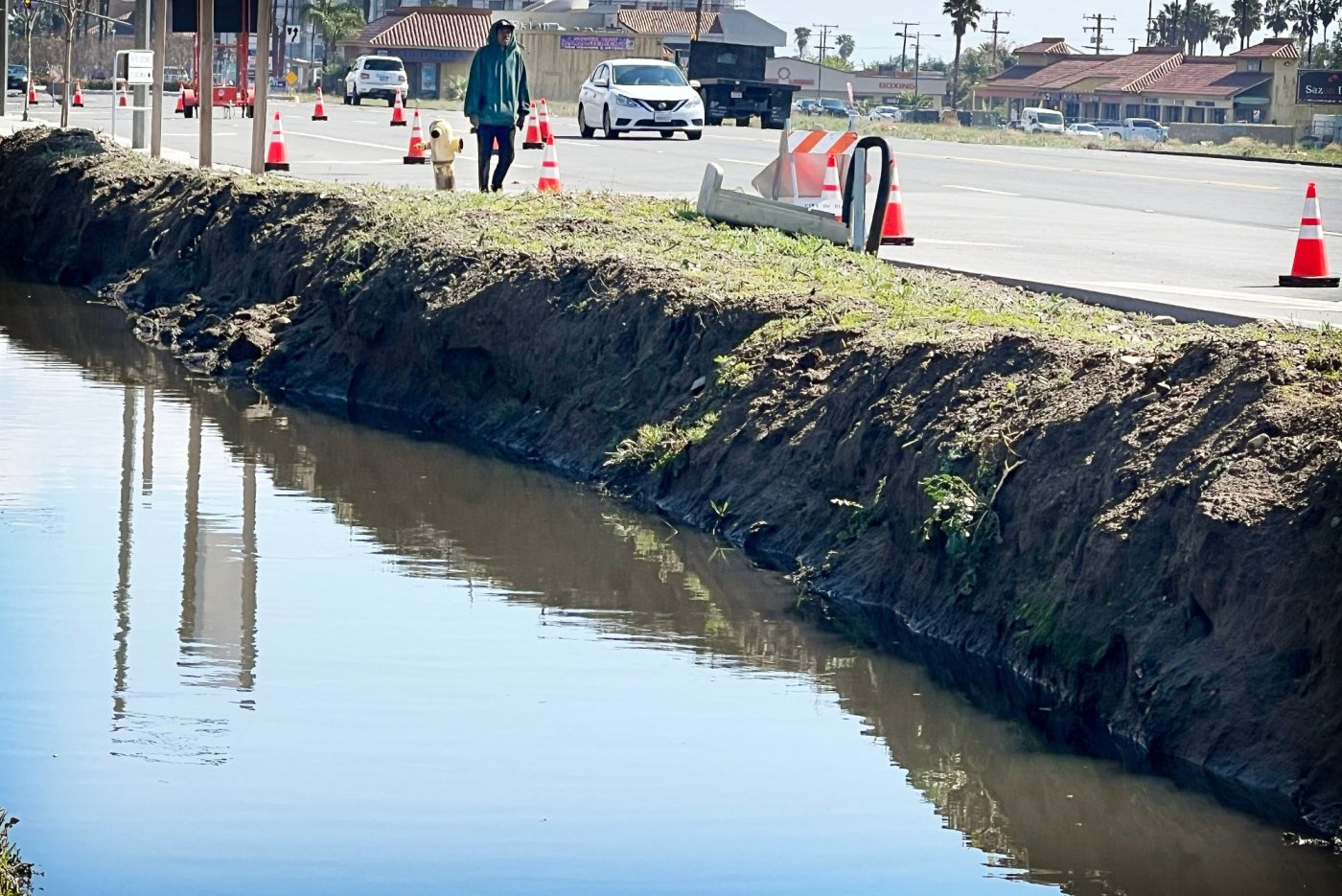
The long-term health of the ocean off the coast of Southern California, and the health of the region’s freshwater streams and rivers and lakes, soon could hinge on the Trump administration’s definition of a single word: ditch.
The Environmental Protection Agency is in the midst of sorting out which of the “waters of the United States,” or WOTUS – the creeks, streams, rivers, ponds, lakes, wetlands, oceans, and, yes, in a few cases, ditches – should still be protected from pollution by the Clean Water Act of 1972.
At least some of the proposed new rules could result in more pollution in Southern California’s vast network of paved flood control channels, which soon could be viewed by the federal government as “ephemeral ditches.” That, in turn, could translate into a dirtier Pacific and dirtier rivers and creeks.
Though details of the EPA’s proposals are complex and filled with legalese, the agency’s broader goal is pretty simple. In November, when it initially posted its water proposals, the EPA wrote: “When finished, this WOTUS rule will help accelerate economic prosperity while protecting vital water resources.”
The original language of the Clean Water Act – which is widely credited with staving off and, in some cases, reversing water pollution for more than a half-century – explicitly mentions environmental and human health, yet says nothing about economic prosperity.
The new emphasis, and the current EPA’s view that economic interests should be critical to environmental rules, pleases many business groups. The comment section of the EPA’s WOTUS proposal, included letters from agriculture interests and home builders and others who applauded what they view as “clarity” of the EPA’s new definitions. Such regulatory clarity is, in fact, a goal that’s been shared by EPA officials from both political parties for many years.
But the new EPA’s business-oriented mindset, as reflected in everything from its preamble to some details of the proposals to remake the Clean Water Act, also frustrates some people who work to reduce water pollution in Southern California.
“Over the years, we’ve seen the definitions change when it comes to which waters are covered (by the Clean Water Act). When Obama was president, the definition gave us more protection. When Trump came in the first time, the definitions became more narrow,” said Garry Brown, founder and president of Orange County Coastkeeper, a Costa Mesa-based nonprofit that works to make sure clean water laws are followed in Orange County and the Inland Empire.
“But we’ve never seen any politician campaign on the idea that more pollution is OK,” he added. “That’s new.”
The business-oriented mindset even rankles people who don’t spend time suing polluters as a way to enforce the Clean Water Act.
“Look, I’m for nature,” said Kyle Gerhard, a Beaumont resident who teaches science at Palm Middle School in Moreno Valley.
“Nature needs more protection, not less,” Gerhard said. “From what I’m hearing, these EPA rules would mean protection.”
The EPA’s move to redefine the scope of the Clean Water Act isn’t anything new. In fact, the Trump administration’s proposals, which are widely expected to kick in later this year, are coming less than three years after the Biden administration’s EPA took on the same question.
Both reinterpretations of the Clean Water Act were sparked by the Supreme Court’s 2023 ruling in a case known as Sackett vs. EPA. That’s when the Supreme Court said federal anti-pollution rules could apply only to waters that had a “continuous surface connection” to other protected waters.
That language raised a lot of questions. Could federal anti-pollution rules be applied to streams and creeks that flow partly underground, which might not have “continuous surface connection” even if those underground streams can, and often do, carry pollutants? What about wetlands that are dry for some or much of any year? Or paved channels that carry storm water from, say, a freeway underpass in Hawaiian Gardens to the ocean off the coast of Bolsa Chica?
The EPA plans to answer all that with a two-part test.
First, does the water in question “abut” another body of water, such as a river or ocean, that is protected under the Clean Water Act? And, second, does the water in question have “surface water” at least during that region’s wet season?
The first part of the EPA’s test – the “abut” rule – could free up millions of acres of land around the country for future development. That would please, among others, groups that hope lower-priced housing can help lower-income home buyers and reduce homelessness. But it also could mean more pollution in waterways that flow above below ground, a category that includes most streams in dry climates such as the southwest part of the United States.
The second part of that test – the “wet season” rule – could exclude many marshes, ponds and streams in dry, higher-elevation areas, such as the Sierra, San Gabriel and San Bernardino mountain ranges. At altitude, in California and other hot areas, wet seasons aren’t always clear or consistent.
By some accounts, the EPA’s proposals would lift water pollution protection from 90% of the nation’s wetlands.
Critically, the EPA’s ideas about water also delve into the world of ditches.
Though federal Clean Water Act rules don’t apply (and haven’t ever applied) to most ditches, they have protected the water flowing in some paved channels that serve as tributaries from existing natural sources, like rivers, and for some ditches on farms that connect to rivers or lakes.
The EPA, under its new proposal, would set anti-pollution rules only for water flowing in ditches that were “constructed or excavated in dry land.”
That could mean huge changes in Southern California.
Over the decades, the state and counties in the region have built more than 500 miles of paved flood control channels to direct stormwater runoff and flows from the Los Angeles, San Gabriel and Santa Ana rivers. Those channels often flow into the ocean.
It’s unclear if the new EPA proposals would force government agencies to adhere to federal rules by paying to remove or prevent certain types of pollution from those paved waterways. If not, pollution could flow more freely.
“As drafted, ‘flood channels’ would not be (protected) waters if they have surface water only in response to heavy rain events,” Sean Herman, a lawyer with San Francisco-based Hansen Bridgett LLP who specializes in water pollution law, said via email.
Herman, who represents clients with a wide range of opinions about environmental questions – from public agencies to commercial developers to agricultural companies – said the EPA’s proposals, as written, present several unresolved issues that figure to be challenged in court.
But he also noted that federal rules might not matter as much in California as they do in other states.
California waters have an extra layer of legal protection – the state’s Porter-Cologne Act, passed in 1969. Herman said in many ways, the state law is more stringent than the Clean Water Act, so even if the EPA bows out of regulating Southern California’s ditch system, the state’s rules might prevent pollution from flowing.
“The Porter-Cologne Act regulates water quality more broadly than the Clean Water Act,” Herman said.
“Where we draw these jurisdictional lines on features like flood channels affects we regulate those features rather than we regulate them.”
In its comment to the EPA, Orange County Coastkeeper argues that many of the agency’s goals – at least those about clarity – aren’t met in its proposed new rules. In fact, Coastkeeper claimed, the proposed new rules “introduces new uncertainty,” particularly in Southern California, where “upstream pollution routinely affects downstream waters” that are covered by the Clean Water Act.
Still, Sarah Spinuzzi, a lawyer for Orange County Coastkeeper, who wrote the comment for her organization, suggested that details in the EPA’s proposal might not be as critical as the bigger, pro-business picture.
“Trump’s EPA has been directed to narrow the scope of the Clean Water Act as much as possible,” Spinuzzi said.
“So when they add in these new variables, like the wet season versus the dry season, that’s kind of not so important,” she added. “When you’re talking about whether water gets polluted or not, the time of year isn’t relevant.”
She added that by filing a comment on Jan 5, the last day when the EPA was taking public comments on its WOTUS proposal, Coastkeeper could have more leverage if it files a lawsuit against some aspect of the new rules.
“It keeps our options open,” she said.
Herman, another lawyer, said a lot of people interested in the Clean Water Act – from all sides of the political spectrum – are keeping their options open, too.
“I expect that there will be more litigation resulting from these proposed changes, as there has been in the past,” Herman said. “And I would expect that future presidential administrations will have a different view of the Clean Water Act, resulting in more tinkering with regulations and more litigation in the future.
“This regulatory volleyball, across presidential administrations, will continue until Congress finds consensus and amends this half-century-old law to provide greater clarity. I look forward to the day when Congress returns to a culture of consensus building.”


