
Today February 1, 2026, 03:00 PM
Today February 1, 2026, 03:00 PM
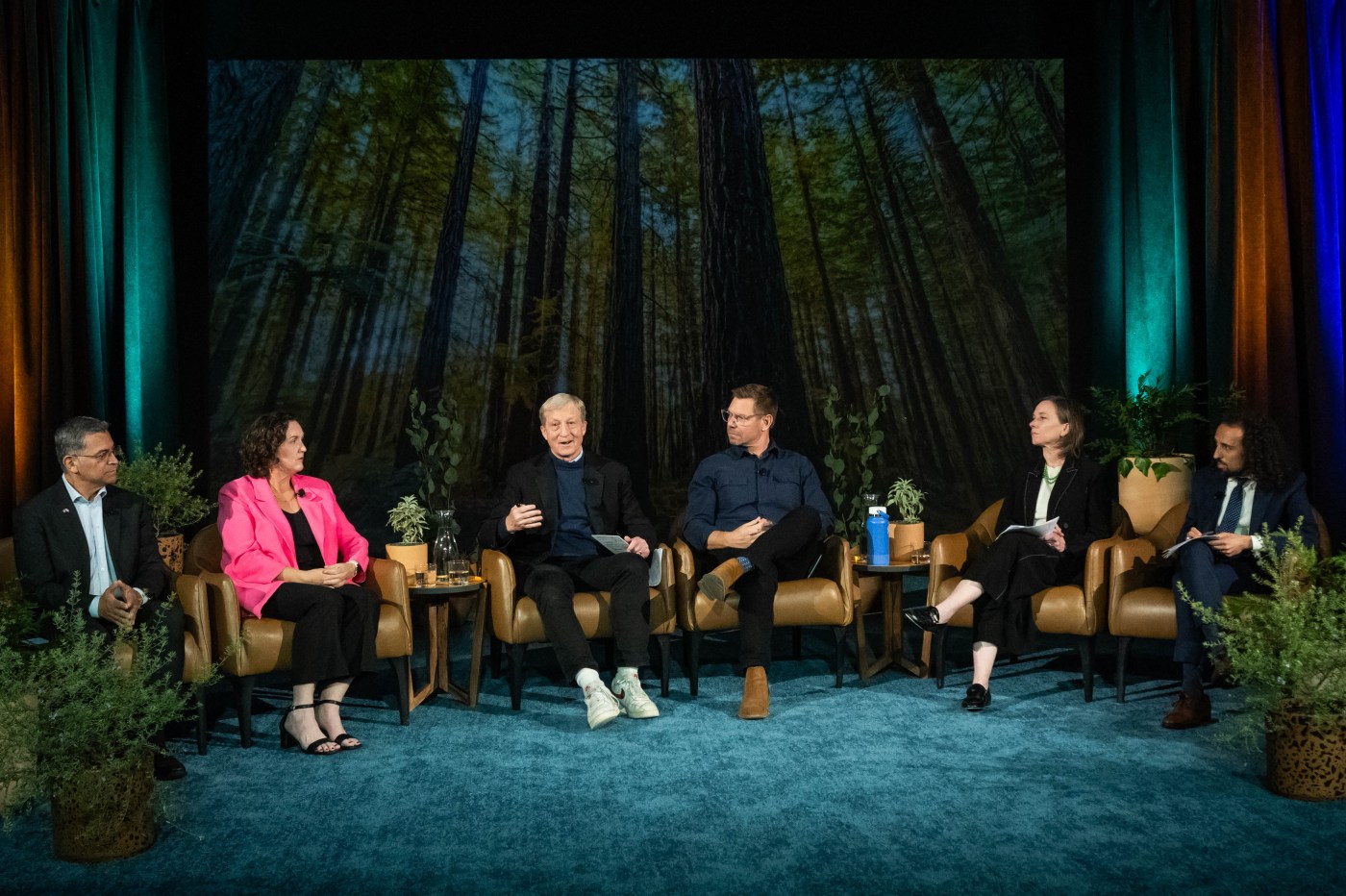
Affordability consistently tops the list of issues that California voters care about.
And according to one environmental group, climate issues also rank up there. In fact, as far as they’re concerned, climate solutions and affordability go hand-in-hand.
A recent poll conducted by California Environmental Voters found that roughly 2 in 3 likely voters favor increasing the state’s investment in clean energy, believe the cost of electric vehicles should come down and think billion-dollar corporations with major environmental impacts should pay to offset climate-driven increases in the cost of home insurance.
“The reality is, the climate crisis is driving an affordability crisis,” said California Environmental Voters CEO Mary Creasman. “These unnatural disasters are driving up energy costs, insurance costs, grocery bills, water rates and more. Corporate greed and climate impacts are creating an economic crisis.”
Creasman’s remarks came during a gubernatorial candidates forum in Pasadena on Wednesday, Jan. 28, where the six top-polling candidates based on recent surveys were invited to participate in person. This included four Democrats: former U.S. Health Secretary Xavier Becerra, former Rep. Katie Porter, environmentalist Tom Steyer and Rep. Eric Swalwell.
Riverside County Sheriff Chad Bianco and former Fox News host Steve Hilton, both Republicans, were also invited to participate in person. But their campaigns did not respond, according to event organizers.
Related: How California governor candidates say they will tackle homelessness
Between the recent forum and interviews with candidates, we take a look at nine major gubernatorial contenders’ plans for addressing environmental issues. (Bianco’s campaign did not respond to requests for an interview.)
To accelerate California’s use of clean energy, Becerra said the state must invest in solar and wind energy — even if the Trump administration wants to slash subsidies and tax credits.
“We’re the fourth-largest economy. We have the resources to make it happen,” he said.
Meanwhile, as more drivers switch to electric vehicles and oil refineries talk about closing down in California, the state must ensure that petroleum remains available for those who continue to drive gas-powered vehicles, Becerra said. Storing and importing gasoline will ensure the supply is there for those who need it, he said.
On the issue of affordability, Becerra said one of the first things he’d do as governor would be to freeze utility rates and insurance premiums on homes because the public deserves a clear answer as to why costs have skyrocketed.
And to help pay for climate resiliency projects to protect against the impacts of wildfires, floods, droughts, pollution and other climate issues, Becerra said he would look at taxing the wealthy.
“We want to have folks who are successful, but you need to do your fair share,” he said of wealthy Californians. “We need revenue. We’ll put it to good use.”
For Hilton, a conversation about environmental policy must include conservation. California’s current policies have gone too far in several places, he said, pointing specifically to electric vehicle mandates, a lack of oil production in the state and housing construction regulations, among other things.
“I love our beautiful, open spaces and nature, and we need to protect and preserve our natural environment. It’s one of the most wonderful things about California,” said Hilton, who called himself “an incredibly passionate environmentalist.”
Calling California’s effort to phase out gas-powered cars in favor of electric vehicles “ridiculous,” Hilton railed against “this forced electrification of everything, regardless of the cost.” The infrastructure isn’t there yet, Hilton said, and in the meantime, he’s concerned about the amount of taxpayer money used for subsidies to help people transition to electric vehicles or equipment and the impact on the grid and energy costs.
As for housing and developments, Hilton said he does not support the push to build more housing with density in mind, meaning massive apartment buildings that provide numerous units as opposed to smaller homes or townhouses; in other words, building upwards instead of outwards.
“They’re trying to force apartments into everything, and they’re trying to make people live a certain way in apartments with no parking so people have to take transit. That’s not how California developed, and it’s actually not at all what they want in California.”
Calling it a war on “family homes,” Hilton said he would support developing more land in the state to make way for single-family homes.
A recent entry into the gubernatorial race — the San Jose mayor announced his candidacy on Thursday, Jan. 29, a day after the environmental forum — Mahan has also made affordability a key component of his platform.
Mahan is considered a more moderate Democrat in the race and has said he supports amending CEQA, California’s landmark environmental law, to make it easier to build more housing.
And in an interview last year, Mahan said he agreed with the Trump administration when it comes to placing a focus on energy dominance to keep up with growing demand.
“We want investment in advanced manufacturing, data centers to happen in San Jose, in California,” Mahan, a former tech entrepreneur, said at the time. “Because if we don’t have that investment here, we can regulate all we want. The important decisions will be made by innovators in other states and even other countries.”
As mayor, a key component of his agenda is cleaning up dirty streets. “A clean street can contribute to a stronger city in so many ways,” his mayoral website said, including by reducing traffic by encouraging people to walk more.
To get more people driving electric vehicles, Porter said California needs to make EVs cheaper for consumers. An EV often costs $8,000 to $10,000 more than a gas-fueled car, she said.
“If we want people to choose EVs, we have to close that gap. We have to make sure that electric vehicles are as affordable as gas vehicles at the point of sale,” the Irvine Democrat said.
In terms of public transit, Porter said rail might be the solution in some places, but it won’t work in others, given California’s diverse communities. She suggested micro transit — a public transportation service that picks up passengers on demand, often using shuttles or vans — as a possible strategy in some communities.
On insurance reforms, Porter said that beyond demanding that insurance companies follow the rules, the state ought to modernize what’s covered under an insurance policy and how the industry processes and pays claims.
To pay for climate resiliency projects, Porter, a former member of Congress, proposed turning to artificial intelligence companies with data centers that require lots of energy, as well as water for cooling, and other companies that use more resources.
“If they’re going to need much more energy … they should be footing the bill for building that infrastructure,” she said.
Like Becerra, Steyer said that as the state transitions to more electric vehicles, it will be important for drivers who still own gas-fueled cars to retain access to affordable gasoline. He suggested it might make sense to turn to Washington state or overseas because shipping gasoline is inexpensive.
That said, Steyer supports having more EVs and said California will need to push to install more charging stations and have them more readily available to alleviate drivers’ fears that their car batteries will die before they reach their destination.
To address sprawling developments, Steyer wants more homes built near public transportation or in walkable communities.
In terms of insurance payouts after climate-related disasters, he said it’s the responsibility of the governor and state attorney general to prevent insurance companies from stonewalling people.
“It should be brought up in court, and we should be pushing on timing and amount,” Steyer said. “I think that what we’re seeing is corporate power, corporate arrogance and a sense that they don’t have to obey the law. In the state of California, that absolutely can’t be true.”
He proposed closing two corporate loopholes, which he estimates would bring in another $15 billion to $20 billion in revenue to the state each year, to help pay for climate resiliency projects.
Because the Trump administration has pulled funding from California to reduce greenhouse gas emissions and deploy green energy technology that would lower costs for Californians, Swalwell proposed standing up a research fund and seeking global investments so that companies in the state can work to bring down greenhouse gases and ultimately use revenues to bring down electricity costs.
In addition, he said the next governor needs to be creative in securing both public and private funding so that regional rail projects can continue even as federal funding for such projects is threatened.
On holding insurance and utility companies accountable when it comes to disasters, Swalwell, a former prosecutor, said he would approach these entities with the mindset that justice must be delivered to disaster victims.
“The (Southern California) fire victims know that their homes will never come back the way that they knew. But they want to know that the next governor gets it and will fight for them. And that’s what you’re going to get (with) me — a prosecutor’s sense of justice in the governor’s office,” he said.
As far as leveraging his contacts in Washington, Swalwell said he’d work to ensure Democrats “claw back” a piece of what the Trump administration has taken away — particularly when it comes to clean energy — during budget negotiations.
“I have a direct relationship with (House Minority Leader) Hakeem Jeffries, and the speakership that he’s going to take when we (Democrats) take the majority is going to be so important for Californians,” Swalwell said. “And my relationship with Hakeem is going to make sure, in every negotiation, we bring back as much as we can.”
To incentivize more people to purchase electric vehicles, Thurmond proposed bringing back a state voucher program to help bring down the cost of such sales. At the same time, he acknowledged that California needs to build far more charging stations to incentivize more people to switch to EVs.
On holding insurance companies accountable, Thurmond said the governor needs to be more forceful. He took issue with insurance companies that were allowed to raise rates or otherwise charge their customers more after last year’s Southern California wildfires.
“I’m sorry, where I come from, if you do a bad job, you don’t get a raise. And so they (insurance companies) shouldn’t get a rate increase at all unless they’re writing more policies,” Thurmond said.
In terms of helping people with long commutes and addressing sprawling developments, Thurmond said he supports a new law allowing taller and denser housing developments near transit stations.
Beyond that, Thurmond said he supports encouraging companies to allow more remote work to help those who must commute long distances. Even just a few days a week of that can cut down on carbon emissions, he said.
To pay for many of the environmental investments he’s proposing, Thurmond pointed to an effort to get a proposed $10 billion bond measure for housing passed this year. Some of that money could be earmarked for housing near transit, he said. In addition, he said, fees imposed on major polluting companies and taxing wealthy individuals more would help pay for some of California’s climate initiatives.
Villaraigosa said he would expand on clean air efforts he backed while mayor of L.A. — specifically, a program that replaced the oldest and dirtiest diesel trucks with cleaner models — as governor.
It’s “affordability first,” when it comes to climate policy, Villaraigosa said in a statement provided by a spokesperson.
“Clean energy means stable utility bills that aren’t whiplashed by global oil prices. Clean transportation means families spend less at the pump. Clean air means fewer hospital visits, lower health care costs and more money in people’s pockets,” he said.
“We can protect our air, water and coast while protecting families and businesses from skyrocketing gas prices and utility bills,” the statement said.
Yee’s plan to tackle environmental issues as the state’s chief executive includes “a tighter focus on preparation for safety and mitigation for resiliency,” according to her platform shared by a spokesperson.
She also wants more consideration of environmental quality — such as clean water, toxins and air quality — in public health policies, as well as prioritizing low-cost renewable electricity generation, among other things.
But Yee is also focused on the federal government and how decisions made by the White House could impact California’s plans or regulations.
“With the vacuum of technology and innovation leadership at the federal level, California needs to respond urgently through an all-of-government initiative and public-private partnerships, prioritizing workforce-of-the-future development and engaging those efforts with, for example, non-traditional learners and neurodivergent youth, who, without early intervention, might otherwise become homeless, experience mental illness or become involved with the carceral system,” Yee’s plan stated.


