Today February 20, 2026, 12:19 AM
Today February 20, 2026, 12:19 AM
By REGINA GARCIA CANO, Associated Press
CARACAS, Venezuela (AP) — Venezuela’s legislature on Thursday approved an amnesty bill that could lead to the release of politicians, activists, lawyers and many others, effectively acknowledging that the government has held hundreds of people in prison for political motivations.
The approval marks a stark turn for the South American nation, where authorities have for decades denied holding any political prisoners. It is the latest policy reversal following the stunning U.S. military raid in the country’s capital, Caracas, to capture then-President Nicolás Maduro.
Acting President Delcy Rodríguez, who proposed the bill late last month, is expected to sign the measure.
The bill could benefit opposition members, activists, human rights defenders, journalists and many others who were targeted by the ruling party over the past 27 years. The debate was suspended last week after lawmakers were unable to agree on some issues, including whether people who left the country to avoid detention can be granted amnesty, and laid bare the resistance from some ruling-party loyalists to see opposition members be granted relief.
Rodríguez proposed the bill weeks after the U.S. military captured Maduro on Jan. 3 in Caracas and took him to New York to face drug trafficking charges.
Venezuela’s government has been quick to comply with orders from the administration of U.S. President Donald Trump, including last month’s overhaul of the country’s oil
As presented last week, the bill’s purpose is to grant people “a general and full amnesty for crimes or offenses committed” during specific periods since 1999 that were marked by politically-driven conflicts in Venezuela, including “acts of politically motivated violence” in the context of the 2024 presidential election. The aftermath of that election led to protests and the arrest of more than 2,000 people, including minors.
Lawmakers voted in favor of the measure’s purpose, but they paused the debate over disagreements on who it would cover, such as people whom the government has accused of various offenses but have evaded trial by hiding in Venezuela or seeking exile abroad. Ruling party lawmakers, including Maduro’s son, insisted during last week’s debate that those individuals should appear before the justice system first to qualify for amnesty as Venezuela’s law does not allow people to be tried in absentia.
“When one sins, I don’t absolve myself at home; I must go to church, I will go to confession (and say), ’Father, I confess that I have sinned,” Nicolás Maduro Guerra said, comparing the church with Venezuela’s justice system. “Therefore, the ritual of saying, ‘I came to the rule of law, and I acknowledge that we are under the law, under strong institutions that have endured and upheld the republic’ … is important.”
His statement, however, ignores that many of the accused, including people currently in prison, often face trumped up charges, are denied attorneys and lack access to any evidence against them. It also overlooks that cases are overseen by rubber-stamping, ruling-party faithful judges.
General amnesty has long been a central demand of Venezuela’s opposition and human rights organizations, but they have viewed the proposal with cautious optimism and raised several concerns about eligibility and implementation.
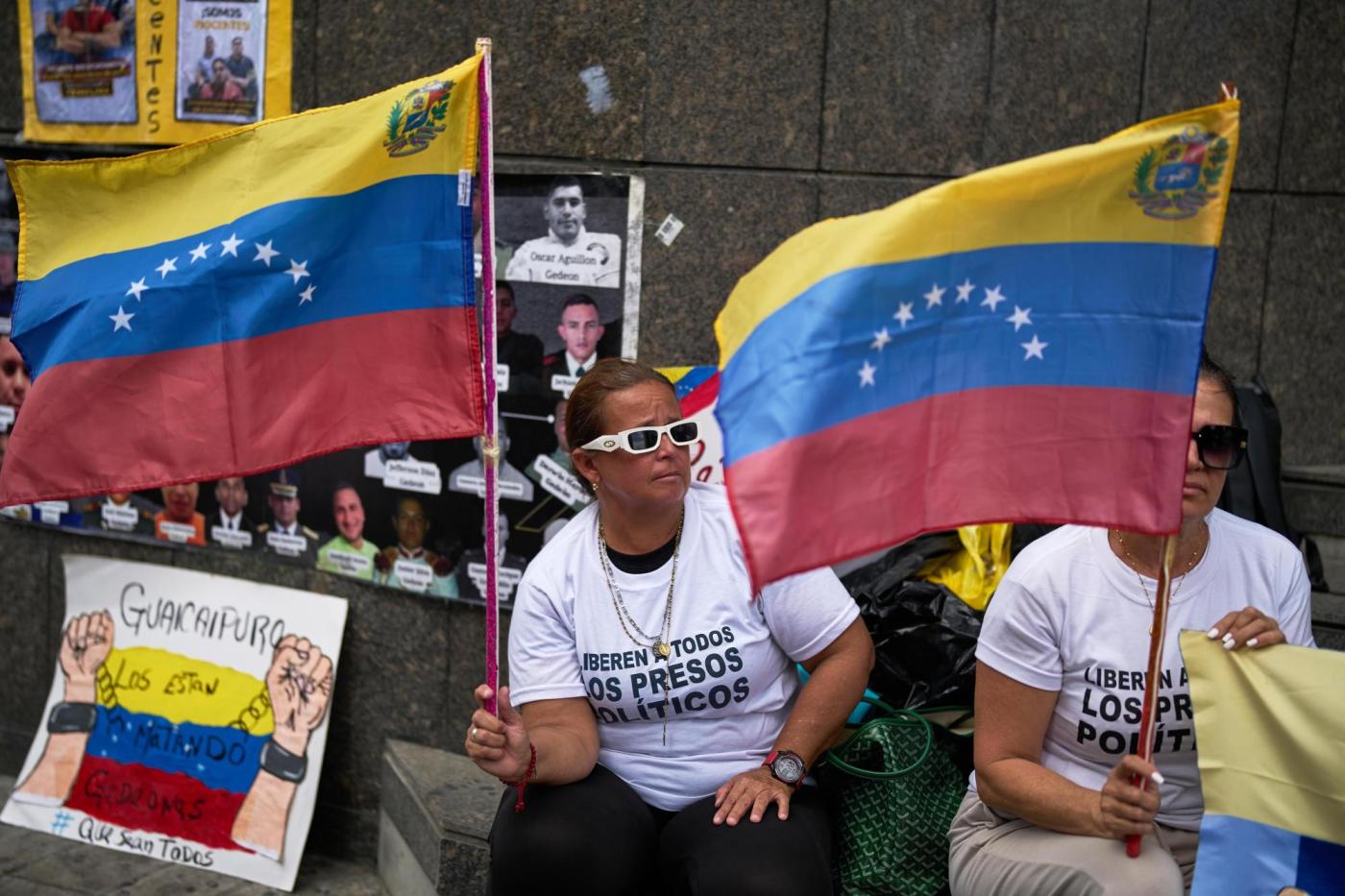
Venezuela-based prisoners’ rights group Foro Penal estimates more than 600 people are in custody for political reasons.
In the days after Maduro’s capture, Rodríguez’s government announced it would release a significant number of prisoners. But relatives and human rights watchdogs have criticized the slow pace of releases. Foro Penal has tallied 448.
Families hoping for the release of their loved ones have spent days outside detention facilities. A few began a hunger strike on Saturday.